Does Eastern Orthodoxy Allow Cremation?
Eastern Orthodoxy strictly forbids cremation. In Orthodox theology, the body is a sanctified temple of the Holy Spirit destined for bodily resurrection; burning the body is considered desecration and denial of dogma. Orthodox priests are forbidden from conducting funerals over cremated remains.
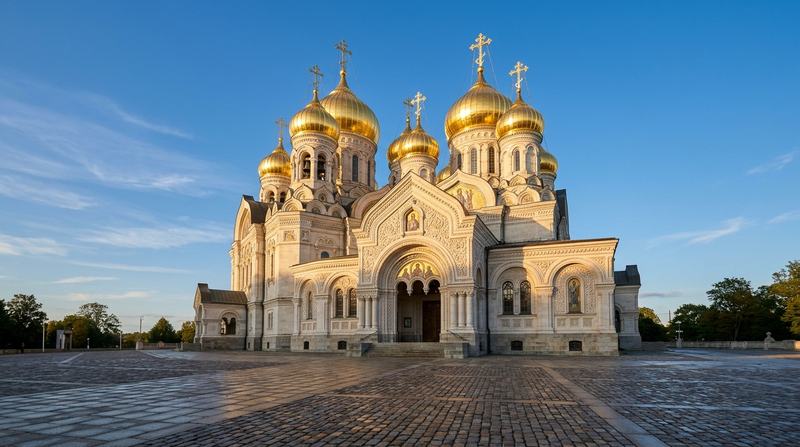
Strictly Prohibited
Canonical classification under Eastern Orthodoxy doctrine.
Holy Synod Encyclical on Cremation (Orthodox Church in America, 1972 & 2014); Greek Orthodox Archdiocese of America Directives
Authoritative scripture, canonical codex, or council ruling.
Strictly forbidden; Orthodox cemeteries do not inter cremains, and church funeral rites are denied to those who willfully choose cremation.
Prescribed treatment of cremated remains.
Discouraged or tolerated only when mandated by secular civil statutes or for international repatriation. Natural bodily preparation without invasive chemical arterial embalming is the historic canonical norm.
Stance on chemical preservation and water cremation.
Theological Rationale & Doctrine
Eastern Orthodox soteriology and anthropology view the human person as an indivisible psychosomatic unity of body and soul. The body is sanctified through Holy Baptism, sealed by Chrismation, and nourished by the Holy Eucharist. It is destined to share in Christ's physical, bodily resurrection at the Eschaton. In Orthodox liturgical theology, physical burial (entombment in the earth) participates directly in the death and third-day resurrection of Jesus Christ. Cremation is viewed as the violent, unnatural destruction of God's handiwork, reflecting pagan or nihilistic philosophies that consider the body disposable.
Scriptural & Historical Authority
1 Corinthians 6:19–20 ('your body is a temple of the Holy Spirit... glorify God in your body'), 1 Corinthians 15:42–44 ('It is sown in corruption; it is raised in incorruption'), and the patristic tradition of the Holy Fathers (such as St. John Chrysostom and Tertullian in De Resurrectione Carnis).
Funeral Rites & Liturgical Rubrics
Orthodox funerals require the presence of the complete, intact human body. The traditional service involves an open-casket viewing, solemn chanting of the funeral canons, chanting of the Trisagion Prayers, the proclamation of Christ's victory over death ('Memory Eternal'), and the 'Last Kiss' (icon and body veneration) by the faithful before burial in the earth facing east.
Rules for Ashes & Final Disposition
Because cremation is strictly prohibited, there are no canonical rubrics for handling cremated ashes other than to treat them with solemn mourning if cremation occurred against church law. Orthodox cemeteries generally do not accept cremated remains for ecclesiastical burial. If an Orthodox Christian willfully chooses cremation, Holy Synods across jurisdictions instruct priests to withhold the church funeral service (Nekrosimos Akolouthia), the Panikhida (memorial service), and memorial prayers.
Aquamation (Water Cremation)
Strictly prohibited. Any artificial, mechanical, or chemical dissolution of the human body violates Orthodox canonical doctrine regarding bodily sanctity and natural earth burial.
Key Points: Eastern Orthodoxy & Cremation
- Cremation is unconditionally forbidden throughout the Eastern Orthodox Church.
- The human body is an anointed temple of the Holy Spirit destined for bodily resurrection.
- Burial in the earth is mandatory, mirroring Christ's entombment in the rock.
- Orthodox clergy are prohibited from performing funeral rites (Panikhida) over cremated remains.
- Cremation services may not take place inside an Orthodox temple or crematory chapel.
- Aquamation and chemical dissolution are rejected as uncanonical.
Primary Sources & Canonical Citations
Official ecclesiastical declarations, sacred texts, and formal responsa governing cremation in Eastern Orthodoxy:
“The Orthodox Church has always upheld the sanctity of the human body and the biblical practice of burial... Cremation is a deliberate rejection of the doctrine of bodily resurrection. Therefore, no religious service may be held for a person who has chosen to be cremated.”View Official Primary Source Document →
“Because the Orthodox faith affirms the fundamental goodness of creation and the resurrection of the body, the Church insists on burial in the earth. Cremation is entirely alien to Orthodox Christian tradition.”View Official Primary Source Document →
Frequently Asked Questions
Can an Eastern Orthodox Christian be cremated?
No. Eastern Orthodoxy strictly forbids cremation. The Church teaches that the body is sacred, created in the image of God, and destined for resurrection. Earth burial is the only canonically recognized method of final disposition.
Will an Orthodox priest perform a funeral if someone is cremated?
No. Under canonical regulations issued by the Holy Synods of Orthodox jurisdictions worldwide, clergy are forbidden from conducting a funeral service (Nekrosimos Akolouthia) or memorial prayers (Panikhida) over cremated remains or in crematory chapels if cremation was willfully chosen.
What if an Orthodox person is cremated against their will?
If an Orthodox Christian is cremated against their explicit prior wishes (for instance, by non-Orthodox family members or civil authorities), a priest may, at the discretion of the diocesan bishop, offer pastoral prayers of mercy for the soul.
Other Christianity Perspectives
Compare how other traditions within the Christianity family approach cremation and burial: