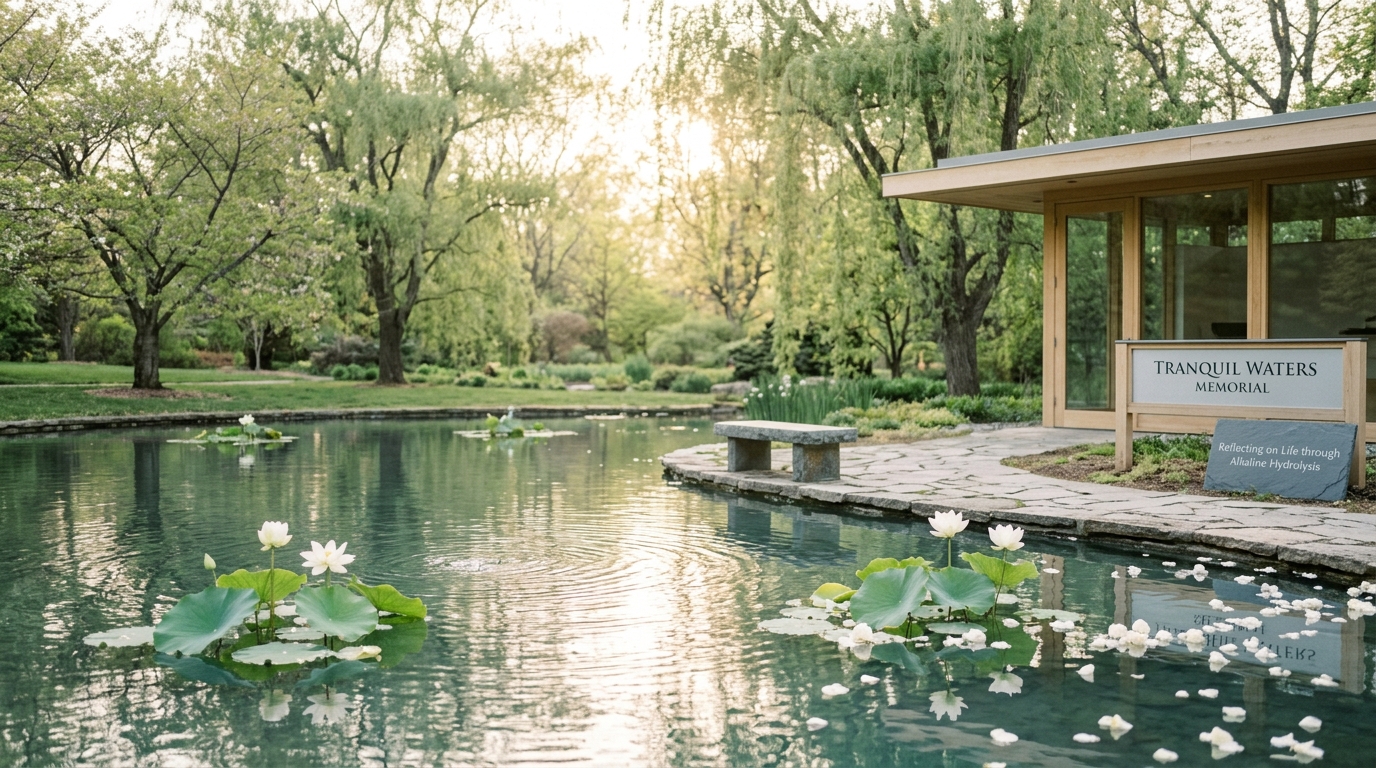
1. The Science: How Water Cremation Works
Alkaline hydrolysis replicates the natural decomposition process that occurs when remains are placed in soil over decades, but accelerates it into a gentle 3-to-4-hour cycle.
The body is placed in a sterile stainless steel vessel containing a solution of 95% warm water and 5% alkali (potassium hydroxide and sodium hydroxide). Controlled heat (around 300°F) and gentle water flow dissolve all organic proteins, fats, and tissues into a clean, sterile liquid solution containing basic peptides, sugars, and salts.
The remaining mineral bone fragments are rinsed, dried, and pulverized into a soft, powder-white ash identical in mineral composition to calcium phosphate.
2. Environmental Advantages Over Flame Cremation
Aquamation has gained massive traction among environmentally conscious families:
• 90% Energy Reduction: Does not require high-temperature natural gas burners (1,600°F–1,800°F).
• Zero Direct Greenhouse Gas Emissions: Emits zero mercury from dental amalgams and zero carbon emissions into the atmosphere.
• 20–30% More Ashes Returned: Because the process is non-turbulent, none of the fine bone mineral is lost to thermal updraft, returning more ash to the family.
Frequently Asked Questions
What happens to the liquid after the process?
The liquid byproduct is 100% sterile water containing organic amino acids and minerals, completely free of human DNA. It is safely treated through municipal water systems or repurposed as rich natural fertilizer for memorial gardens.
Is aquamation legal in my state?
Alkaline hydrolysis is currently legalized in 28+ US states, with active bills advancing across additional state legislatures every session.